
Summary
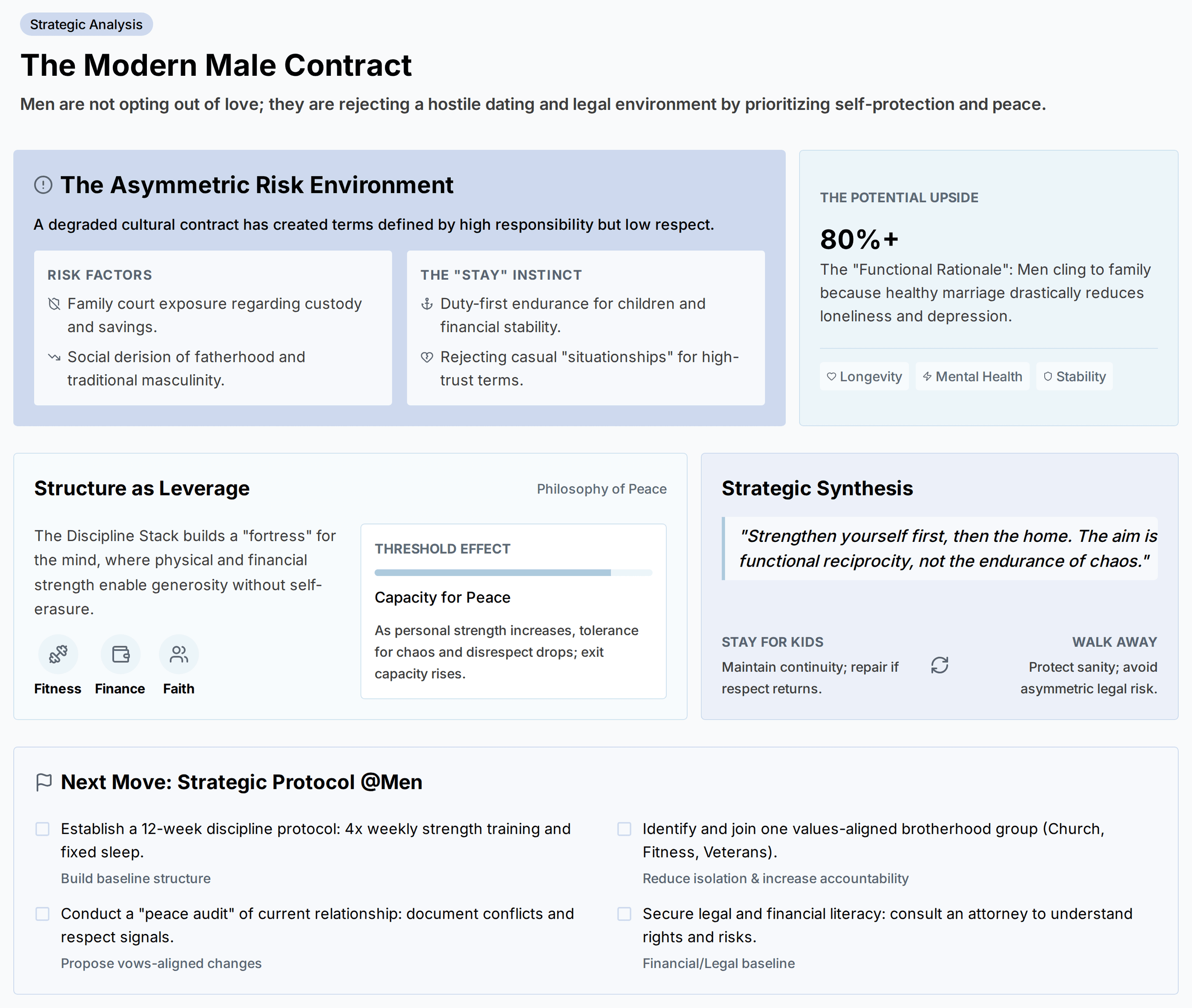
Men are not “opting out of love”; they are rejecting a dating and legal environment perceived as hostile to male commitment, where risk concentrates on men (financial, custody, social disrespect) and reward is uncertain, so they default to two strategies: stay in imperfect relationships for children and stability, or build disciplined, self-protective lives and wait for high-trust partnership. The broadcast cites a BuzzFeed confession set as evidence that many men remain in unhappy relationships due to kids, money, and stability—framed as a conservative, duty-first instinct—and argues modern culture undermines male roles via hookup norms, no-fault divorce dynamics, and mockery of masculinity, while data shows healthy marriage benefits men’s mental health. The causal chain runs: degraded cultural contract → perceived asymmetry of risk (family courts, disrespect, infidelity normalization) → strategic withdrawal from dating or endurance inside weak relationships → investment in structure (fitness, routine, finances, brotherhood, faith) to restore agency and peace. We acknowledge the moral center: we value vows, duty, and sanctuary; we reject systems that punish fathers for trying to lead and provide; we will raise standards by strengthening the man first, then the home.
Strategic Frame: Duty vs. Modern Relationship Economics
The Cultural Contract Shift
Status: Mainstream dating culture prioritizes casual “situationships,” perpetual auditioning, and “you deserve better” narratives.
Effect: Men perceive low-trust terms—high responsibility with low respect—and exit or downshift participation.
The Risk Concentration on Men
Components: Financial provision expectations, family court exposure (custody and savings loss), social derision of fatherhood/masculinity.
Outcome: Staying “for kids” becomes a rational sacrifice; leaving triggers stigma (“selfish/toxic”).
The Counterweight: Health Benefits of Healthy Marriage
Evidence cited: Reduced loneliness, depression, and substance abuse; extended longevity when relationships are functional.
Implication: Men cling to the shell of family because the potential upside is real if respect and vows return.
Structure as Leverage: Fitness, Routine, Peace
The Philosophy of Peace (Not Passivity)
Need: Calm homes, loyal partners, conflict as exception; peace as a primary selection criterion.
Market Signal: Viral content around men prioritizing mental health and “partners who bring peace.”
Discipline Stack
Elements: Gym, sleep, diet, finances, routine, brotherhood, faith.
Mechanism: Structure builds a “fortress” for mind and heart, enabling generosity without self-erasure.
Threshold Effect: As strength and order increase, tolerance for chaos and disrespect drops; exit capacity rises.
Identity Cueing and Conservatism
Claim referenced: Physical strength often correlates (or is perceived to correlate) with conservative values—hierarchy, self-reliance, traditional structure.
Strategic Read: The same mocked values are those stabilizing families; criticism and demand for “good men” are in tension.
Dialectic: Stay vs. Walk Away
Thesis (Stay for Kids and Stability)
Pros: Continuity for children; potential to repair if mutual respect returns; alignment with duty-first ethos.
Cons: Personal misery; cultural mockery of staying; risk of long-term mental health erosion if unrepaired.
Antithesis (Exit the Dating Market)
Pros: Protect sanity; avoid asymmetric legal and social risk; build strength and options.
Cons: Isolation risk; forfeited near-term intimacy; public narrative frames men as commitment-averse.
Synthesis (Raise Standards, Build Capacity, Select for Peace)
Verdict: Strengthen yourself and your structure; pursue partners aligned with vows and duty; lead reconciliation where possible, walk if necessary. The aim is functional reciprocity, not endurance of chaos.